Making regular blog posts is proving to be difficult—but if I can’t make posts that are particularly insightful or original, I thought the least I could do is share some of the cool stuff I’ve been reading for my classes (and there has there been a lot of reading).
I’ve read only one other thing by Stephen Crane before, back in my undergraduate studies, called Maggie: A Girl of the Streets. As I read many things over the course of the past few years, some of which remain in my memory about as strongly as a stranger’s face I’ve passed on the street, I didn’t quite know what to expect of Crane’s short story. All I remembered about Maggie was that it had been set in New York and ended tragically after following the life of a desolate girl. Sure enough, The Monster was also tragic and eerie—the best kind of read. It’s apparently considered one of the best American short stories, and while “best” is subjective and not a word to be used lightly (I can never pick a “best” or “favourite” anything), I highly recommend it. You can read the full story online here.
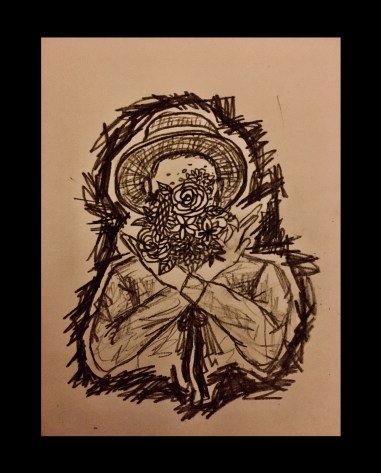
The story is about a black man who runs into a fire to save a young boy, the son of an affluent (and white, duh) doctor. In the process, burning acid from the doctor’s mysterious laboratory drips onto his face and he becomes what the other characters describe as faceless (I was thinking something like Slenderman, but there are descriptions of his one remaining eye, him talking and listening, so his facial features seem intact to an extent). Although initially considered a hero for jumping into the burning house to save the boy, he is quickly shunned by the town as a monster and is even accused of being crazy and harmful even as he does nothing but whimper in his pain or offer polite gestures in an attempt to maintain social relations. The doctor takes it upon himself to look after the man (he saved his son after all), while other characters tell him he should have let him die. There’s a lot of town gossip and finger pointing, and the readers can begin to see that a monster, to this town, could mean many things. It could mean mentally ill, physically deformed, something racial, perhaps even class-based, or an unfortunate combination of these things.
I’ve always been fascinated with monsters in literature (I remember doing a high school project on “man-made monsters” in Othello and Frankenstein, and seriously sympathizing with Frankenstein’s monster—even though in hindsight he did do some terrible things like murder people, which cannot be excused due to poor parenting). In class this past few weeks, a particular definition of what a monster is in our reality—I’m not talking fantasy creatures or scientific experiments gone bad—really struck me. According to the book Multitude: War and Democracy in the Age of Empire by Michael Hardt and Antonio Negri, “the monster is not an accident but the ever present possibility that can destroy the natural authority in all domains.” What does this mean?
Well, from what I understand, this means that the monster could be seen as a figure of resistance, or revolution. “Natural authority” is never really a thing (power is a construct, am I becoming one of those obnoxious graduate students who continuously refer to Foucault in some way?), only packaged in this way to validate authority. And who has seen old books like Frankenstein call supposed monsters abhorrations? They are only abhorrations because others abhor them, not because of an essentialized monstrosity. People label monsters when they see something supposedly different from them, people who make them feel uneasy because they see in the monsters what they themselves could be (disfigured, mistreated, segregated etc.) or as people they have marked boundaries against, boundaries that they know are flawed and that the monster has the power of crossing or at least highlighting. Monsters are the figures that can point out the unfair hierarchies and restrictive boundaries placed by societies. Monsters push us to consider uncomfortable questions, like Crane’s monster: how does the justice system fail us? How is there racial prejudice, or prejudice against the non-normate body? Who has the authority to say whether someone in pain should live or die?
My professor jokingly asked—then should we all be monsters? At the very least, we should not be afraid to be deemed monstrous for fighting against problematic societal structures. All this talk about monsters seems fitting as we enter October and Halloween: so go forth and be monsters.

 Su Cool for School