Invasion Nation (Example Literature Course Syllabus)

Whitagram-Image

Since I’m feeling far too lazy to write a whole new post, I thought I would share a course that I had to design for one of my classes the past semester. It was a fun project and the first time I was asked to create my own syllabus, course materials, and a week’s worth of lesson plans intended for an undergraduate literature course (usually any assignments I am asked to complete for my graduate courses are things like book reports, book reviews, class presentations, and papers). Since it was my first time designing my own course completely independently, the course below still has a lot of flaws and probably reflects a far too ambitious reading load. I imagined this course to be an upper-level undergraduate literature seminar. I hope I have the opportunity to teach a course like this in the near future and hope someone finds this post useful for seeing some of the elements you need to think about when designing your own course—or at the very least, someone is able to take away some reading suggestions if they are interested in speculative fiction. I’ve removed all the sections describing university policies and directing students to university resources.

ENGL 4XX: Invasion Nation

Spring 2020, MTW

Instructor: 

Contact:                              

Office Location: 

Office Hours: 

Classroom: 

Class Time: 

Course Description

 “One resists the invasion of armies; one does not resist the invasion of ideas.” — Victor Hugo

The threat of invasion is often imagined as a challenge to the nation to protect its borders, citizens, and even ideology. Whether from viruses, human invaders, or alien life forms, the various ways such anxieties are projected onto fiction reveal what kind of invasions may be envisioned as most threatening or already close to our reality. The examination of possible responses to disastrous invasions also helps us question the extent of state power and further troubles our understanding of nationhood: how did similar invasions unfold in the nation’s history? Who and what is considered to be a danger to the nation? What happens in catastrophes that become transnational? In light of the recent coronavirus pandemic, which highlights the extent of globalization, different national policies, and the racialization of disasters, these questions are now more relevant than ever. This course will look at various invasions in contemporary American works of fiction, although it won’t be limited to the geographical space of the United States as the only nation under potential attack.

The course will be divided into four units as we explore invasions from the plausible to the fantastical. The first unit will be looking at infectious invasions of imagined viruses and diseases. The next unit will look at alien invasions, whether taking place on Earth or in outer space. The third unit will be on environmental invasions, which will examine both how humans destroy and are attacked by the environment around them. The last unit will be on invasions of reproductive freedom. After contextualizing each text in relevant histories and conversations, we will work together to explore how society’s organizational structures are reconstructed and reimagined in the face of these various dangers.

Course Objectives

This course is an upper-level seminar focused on contemporary American literature. While no prior knowledge about contemporary American literature is required, this is a reading-heavy course that I hope will facilitate collaborative discussions. Completion of the assigned readings is necessary to engage meaningfully in class discussions and produce quality writing for assignments. Over the course of the semester, our goal will be to develop:

  • An understanding of the role of literature in reproducing, highlighting, or critiquing national anxieties and the particular affordances of various fictional genres (e.g. speculative fiction, alternative histories, film, short stories).
  • Skills in close reading and literary analysis demonstrated orally and in writing, with the aim to help build your confidence as a critical thinker, reader, and writer.
  • The ability to engage with appropriate historical context and critical conversations/concepts (including but not limited to discourses in biopolitics, Afrofuturism, feminisms, or ethnic studies) to help you think about the course’s interests in nationhood, citizenship, and belonging.                                                           

Required Texts

***I encourage you to find the books below in whatever format is most accessible to you, whether buying your own physical copy (all books should be available new and used on websites like Amazon), obtaining an ebook, or borrowing from the library.

1) Infectious Invasions

  • Dread Nation, Justina Ireland (ISBN: 978-0062570611) (464 pages)
  • American Zombie, Grace Lee (film, 96 minutes)
  • The Ragdoll Plagues, Alejandro Morales (ISBN 978-1558851047) (200 pages)
  • Severance, Ling Ma (ISBN 978-1250214997) (205 pages)

2) Alien Invasions

  • Intro to Alien Invasion, Owen King, Mark Jude Poirier, Nancy Ahn (ISBN 978-1476763408) (graphic novel, 224 pages)
  • Dawn (Book One of the Xenogenesis Trilogy), Octavia Butler (ISBN 978-0446603775) (256 pages)
  • Ancillary Justice, Ann Leckie, (ISBN 978-0316246620) (409 pages)
  • “Story of Your Life,” Ted Chiang (short story available online on Canvas, 39 pages)

3) Environmental Invasions

  • Area X: The Southern Reach Trilogy, Jeff VanderMeer (ISBN 978-0374261177) (608 pages)
  • The Windup Girl, Paolo Bacigalupi (ISBN 978-1597808217) (480 pages)
  • Octavia’s Brood: Science Fiction Stories from Social Justice Movements, edited by adrienne mare brown and Walidah Imarisha (ISBN: 9781849352093) (312 pages)

4) Invasions of Reproductive Freedom

  • Future Home of the Living God by Louise Erdrich (ISBN 978-0062694065) (288 pages)
  • Book of Etta (Second book in The Road to Nowhere series), Meg Elison, (316 pages)
  • Rosemary’s Baby, Roman Polanski (film, 136 minutes)

Course Requirements

GRADED WORK PERCENTAGE
Class Participation and Quizzes 20%
Reading Response 1 (2 pages) 10%
Reading Response 2 (2 pages) 10%
Class Presentation (10-15 minutes) 10%
Midterm Paper (4-5 pages) 20%
Final Paper (6-8 pages) 30%

Class Participation and Quizzes (20%)

Class participation includes general engagement with the course, covering regular attendance, coming to class on time, adherence to deadlines, completion of readings, and productive participation in discussions and class activities. Because this is a smaller seminar, I encourage you to engage in conversation as much as possible and to the best of your ability. Everyone has different comfort levels when it comes to speaking in front of others so if this concerns you, please let me know and we can discuss strategies together.

After introducing each new text, we will have short quizzes to check the completion of readings and basic reading comprehension. This should not take more than a few minutes and the quizzes will be centered around questions about plot, characters, and themes that should be easy to answer if you have read all the material. Quizzes will be marked with a check minus, check, or check plus.

Reading Responses (2 x 10% = 20%)

For this course, you will write two reading responses on any two primary texts of your choice. Before each unit, I will distribute possible prompts relevant to the unit to help you focus your ideas. Although which texts you decide to write on are up to you, I want you to spread out the responses across two different units. These do not have to be polished papers but should be proofread and convey a coherent line of thought; they are an opportunity to practice close analysis and explore ideas that you might want to pursue for the longer paper assignments. You do not have to notify me in advance about when you want to submit a reading response, but you should submit each one before the class period we are first introducing the text you have chosen to write on. Submission should be through the appropriate Canvas dropbox.

Class presentation (10%)

At the beginning of the semester, we will divide the class evenly across the four units. At the end of your assigned unit, you should give an oral report with the following components: 1) what text or theme interested you most from the unit and a tentative argument about what it may be trying to show 2) a summary of an academic journal article relevant to this interest and how it adds to our previous class discussions 3) one question you want to put forward to the class in light of your presentation. The report should be no longer than 10-15 minutes, and you should be prepared to answer questions from the class about your argument and chosen article. For the article component, we will discuss how to access the right databases together as a class and I am always available for extra assistance.

Midterm Paper (20%)

For the midterm paper, I will give you three choices: two prompts and the option to create your own question that you hope to answer (if you choose the last option, please discuss your question with me in advance). You should aim for 4-5 pages and engage thoroughly with one text. We will have peer reviews of an outline and the full paper draft.

Final Paper (30%)

For the final paper, I will give you three choices: one prompt asking you to think critically about one text, one prompt asking you to put two texts in conversation with one another, and the option to create your own question about something you want to explore (as with the midterm paper, please discuss the question with me in advance). You should aim for 6-8 pages. We will have a peer review of the final paper proposal.

***All papers should follow the most recent MLA guidelines—submitted in 12-point, Times New Roman (TNR) font, double-spaced, with one-inch margins. All written work should be submitted electronically through Canvas. Please double-check that your file is successfully uploaded.

Grading

Your assignment grades will be available on Canvas throughout the semester so you can keep track of your performance. Before you reach out to discuss a grade, please wait 24 hours after you receive feedback on an assignment so you have enough time to read and process my comments.

All assignments in this course will receive a letter grade, following the University grading system. Grades in the A band will reflect excellent work, grades in the B band good work, grades in the C band satisfactory work, D grades unsatisfactory work, and F grades unacceptable work. In the case of a late submission without consulting me in advance, I will dock half a grade for each day after the deadline the assignment is received.

Course Policies and Campus Resources (removed)

Course Schedule

***All assigned readings should be completed by the day the text is first introduced. Additional secondary readings may be introduced throughout the semester.

***Topics are tentative and offer possible concepts to be explored. 

Week One

Date Topic Readings Due Work Due
1/13 Mon Course intro
UNIT ONE INFECTIOUS INVASIONS
1/15 Wed Intro to unit

Historical context and alternative histories

Justina Ireland’s Dread Nation
1/17 Fri Race and conflicting narratives

Week Two

Date Topic Readings Due Work Due
1/20 Mon Afrofuturism and zombie preparedness
1/22 Wed The masses Watch Grace Lee’s American Zombie
1/24 Fri The individual

Week Three

Date Topic Readings Due Work Due
1/27 Mon Historical context and colonial history Alejandro Morales’ The Ragdoll Plagues
1/29 Wed AIDS and reproduction
1/31 Fri Techno-Orientalism

 Week Four

Date Topic Readings Due Work Due
2/3 Mon Historical context and Asian Am literature Ling Ma’s Severance
2/5 Wed Transnationalism
2/7 Fri Capitalism and zombification

Week Five

Date Topic Readings Due Work Due
2/10 Mon Unit wrap-up Assigned unit presentations
UNIT TWO ALIEN INVASIONS
2/12 Wed Intro to new unit

Historical context and genre of the graphic novel

Owen King, Mark Jude Poirier, Nancy Ahn’s Intro to Alien Invasion
2/14 Fri Institutions and education

 Week Six

Date Topic Readings Due Work Due
2/17 Mon Historical and author background Octavia Butler’s Dawn
2/19 Wed Consent and colonialism
2/21 Fri Identity

 Week Seven

Date Topic Readings Due Work Due
2/24 Mon Context and narrator (Justice) Anne Leckie’s Ancillary Justice
2/26 Wed Social hierarchies (Propriety)
2/28 Fri Ethics and embodiment (Benefit)

Week Eight

Date Topic Readings Due Work Due
3/2 Mon Narration and temporality Ted Chiang’s A Story of Your Life *Recommend having at least one reading response submitted by this point
3/4 Wed Unit wrap-up Assigned unit presentations
3/6 Fri Midterm paper outline peer review Midterm paper outline

SPRING BREAK: NO CLASSES MARCH 9TH-13TH

Week Nine

Date Topic Readings Due Work Due
UNIT THREE ENVIRONMENTAL INVASIONS
3/16 Mon Midterm paper draft workshop Midterm paper draft
3/18 Wed Intro to new unit

Recordkeeping and narration


Jeff VanderMeer’s Annihilation (Area X Book 1)
3/20 Fri Institutional authority and categorization Jeff VanderMeer’s Authority (Area X Book 2)

Week Ten

Date Topic Readings Due Work Due
3/23 Mon Science vs. Séance


Jeff VanderMeer’s Acceptance (Area X Book 3) Midterm paper due
3/25 Wed The Area X Trilogy as a whole

Slow violence

Hyperobject

3/27 Fri Storytelling as activism Select stories from Octavia’s Brood (TBD)

 Week Eleven

Date Topic Readings Due Work Due
3/30 Mon Context and genetic modification


Paolo Bacigalupi’s The Windup Girl
4/1 Wed Utopia and refuge
4/3 Fri The cyborg and the corporation

 Week Twelve

Date Topic Readings Due Work Due
4/6 Mon Unit wrap-up


Assigned unit presentations
UNIT four Invasions of reproductive freedom
4/8 Wed Intro to new unit

Context and evolutionary science

Louise Erdrich’s Future Home of the Living God
4/10 Fri Surveillance and religion

Week Thirteen

Date Topic Readings Due Work Due
4/13 Mon Sovereignty
4/15 Wed Final paper proposal workshop Final paper proposal
4/17 Fri Make up/extra day to meet with me about final paper ideas

Week Fourteen

Date Topic Readings Due Work Due
4/20 Mon Context and lore


Meg Elison’s The Book of Etta
4/22 Wed Communities and family formations
4/24 Fri Gender identity

Week Fifteen

Date Topic Readings Due Work Due
4/27 Mon Context: revisiting in the era of #MeToo


Watch Roman Polanski’s Rosemary’s Baby
4/29 Wed Unit reflection Assigned unit presentations
5/1 Fri Course wrap-up

***Final papers due Wednesday of finals week, 5/6.
#Blackouttuesday and Reading Recommendations

Whitagram-Image

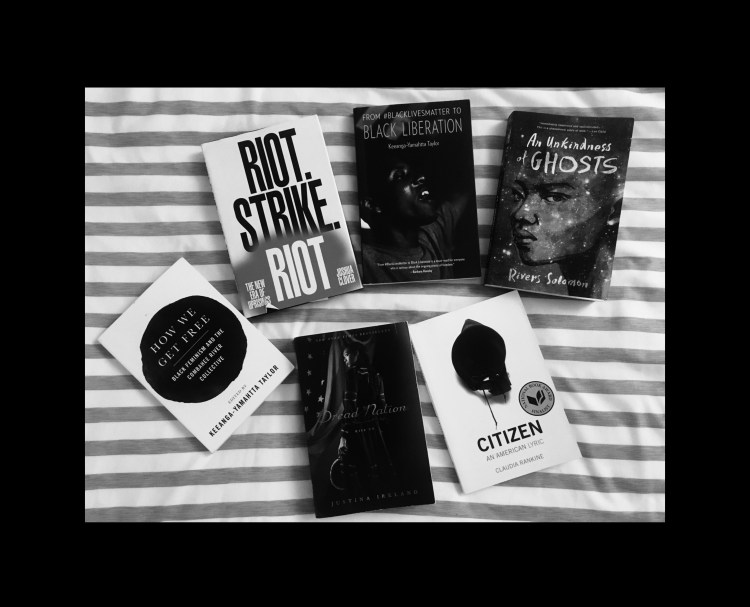
Reading about things is probably not the most active way to help the current situation, but I believe that it’s still important (along with other ways to contribute, including through methods compiled in this link: blacklivesmatters.carrd.co). Reading recommendations below are completely arbitrary based on my own limited bookshelf/knowledge but could be worthwhile summer reads:

1) Keeanga-Yamahtta Taylor’s From #BlackLivesMatter to Black Liberation: a historical analysis of systemic racism and everything leading up to the Black Lives Matter movement.

2) Keeanga-Yamahtta Taylor’s How We Get Free: a collection of essays and interviews (including with BLM co-founder Alicia Garza) celebrating the Combahee River Collective and black feminism.

3) Joshua Clover’s Riot. Strike. Riot.: a historical analysis of strikes and riots as legitimate modes of anti-capitalist resistance.

4) Claudia Rankine’s Citizen: this may be familiar as it was widely talked about when it first came out, but if anyone is looking for something less dense to read this is a prose poetry book examining the everyday realities of black experience.

5) Justina Ireland’s Dread Nation: an alternative history of the Reconstruction era, in which the dead come back as “shamblers” and African American characters experience a new kind of slavery by being trained to protect other citizens from these zombies. An entertaining YA novel highlighting the real historical dispensability of black lives despite its fictional setting.

6) Rivers Solomon’s An Unkindness of Ghosts: although there are many other notable Afrofuturist texts, this is a fairly recent SF novel set on a space ship on the brink of revolution where systems of slavery and segregation persist.

5 Minute Writing Prompt Ideas


Whitagram-Image

Teaching a first-year writing course—with an emphasis on rhetoric—the majority of my students were non-English majors (in fact, I didn’t have a single English or humanities major across the two sections I taught in the past year, each comprised of 24 students. Most were engineering or business students. I know STEM fields are popular now but it’s looking a little bleak for other departments!). As much as I enjoyed interacting with them all and seeing them pursue their personal interests through the assignments, this meant that most of my students weren’t particularly passionate about writing and were taking the course just to fulfill a core requirement. To get students comfortable with writing, my department encouraged us to use an activity called “Write for 5,” in which the students were asked to freewrite for 5 minutes about various topics. This was usually introduced at the beginning of each class period to help students wake up, have something concrete written down before a potential class-wide discussion so they felt more comfortable about sharing their ideas if they already had them on paper, and to assess for intellectual engagement and participation for the occassional instances I asked the students to hand their writing in. This activity was useful for helping students brainstorm for an upcoming assignment, identify a particularly memorable moment in the readings for the day, or reflect on their progress (at the end of each unit, they were asked to write down their main takeaways, any obstacles they encountered and how they overcame them, as well as any suggestions for what the instructor could improve about the unit or help them with in the next unit). Because the students presumably felt less pressure to be perfect during this activity than in their formal assignments, it was a fun way to explore their creativity and critical thinking.

Despite many of them being unfamiliar with “casual” writing to record their ideas, many of my students said the Write for 5 activity was one of their favorite things about the course. This past semester one student even told me they started a diary after feeling inspired by the in-class writing prompts, something they said was helpful as they tried to work through the recent loss of a family member. Although I did use some prompts provided to me by my department, especially if they contributed to a longer writing assignment that the students were working on at the time, I also often tried to come up with prompts of my own and had a lot of fun doing so. Along with the brief writing activity, I also tried to learn more about my students by having a question of the day that they responded to (in a few words at most) as attendance instead of allowing them to just answer to their name with a lackluster “here.” Sometimes they were asked to give a detailed rationale for their answer from the attendance question in their Write for 5 responses. Whether you want to share these prompts with your own students or want to think about them for a diary entry, I’ve compiled some of the questions I enjoyed asking below.

1. If you could put anything in a time capsule to be opened in 50 years, what would it be and why? 

  • This was especially relevant because our university found a time capsule from 1949 encased in concrete during a building renovation earlier this year. I asked this question just after we went online for the rest of the semester, so many of my students said they would record the state of things during the coronavirus pandemic!

2. What is a new skill you learned or returned to during quarantine/the stay-at-home order (e.g. new recipe, new habit, new workout)? What are the challenges and benefits of practicing this skill under the circumstances?

  • Designed to help students think about something good in the midst of the chaotic circumstances. Although you don’t necessarily have to learn anything new or feel more productive in these strange times, I like the fact that many of us are picking up new hobbies (like countless others , I am currently into baking/cooking).

3. When was a time you disagreed with someone and had an argument? How did you try to clarify and support your own position? What were some strategies you used to maintain a tone of respect/establish common ground/appeal to your opponent (or you wished that you used)?

  • This is mostly relevant to a productive counterargument assignment the students were working on at the time, but it also offers anybody an opportunity to assess how they deal with conflict.

4. What is one kind of class that you wish [your university] offered? That is, if you could propose any course what would it be and why?

  • I had a wide range of responses to this one, from a viticulture class, a basic cooking class for students living in dorms with limited equipment, a budgeting class, etc. Even if you are no longer a college student, it’s interesting to think about what unique classes could be offered at these institutions.

5. What do grades mean to you/what is your relationship with school grades? What do you want this relationship to look like throughout your time in college? Did your view of grades change after your first semester? If you could change the grading system in schools, would you change it and why or why not? How would you change it and why?

  • Again, this prompt is most relevant to college students, but I enjoyed this one because a lot of my students had interesting opinions about the current grading system. Some thought schools should factor in effort more into the final grades, while others suggested that the option to drop a particular/lowest quiz or exam grade in a course should be more widely adopted because everyone has a bad day from time to time.

6. How do you feel about writing? What helps you write (certain environment, music, habits, snacks etc.)? What keeps you from writing the way you want to? If you could only write about one topic for the rest of your life, and your livelihood depends on it, what would it be?

  • Although you can tell this is a prompt for a writing course, this may also be useful for anyone thinking about what kind of environment they are most productive in and what topics they are truly passionate about. I received answers like soccer, music, personal stories, and feminism, all of which had nothing to do with what the students were actually majoring in but did come through in some of their papers!

7. Is cereal and milk a type of soup or is the milk a sauce to the cereal? What is your rationale?

  • This seems like a silly prompt and you may have seen this one online with similar questions like “is a hotdog a kind of sandwich?” I used this as an attendance question rather than a full writing activity, but the class debate that ensued suggested students had enough arguments to turn their responses into a proper paragraph (logos is part of rhetoric after all!). I’m including this prompt just to show you can use silly questions like this to get people talking and to practice backing up their opinions. Other questions I used for attendance are things like “if you could have any superpwoer, what would it be?” or “if you could only listen to one song for the rest of your life, what would it be?”

8. Identify one problem or area for possible improvement at your high school [can be replaced with university, workplace, home]. What can you suggest to solve this issue? 

  • This was actually to help students generate ideas for their proposal assignment, but it was a successful prompt because it was a chance for them to demonstrate their problem-solving skills. I think they were surprised by the insight they had about the things that needed to be changed.

9. If there was a zombie apocalypse, where on campus [can be replaced with town/other location] would you hide and why? What is the criteria you would need to pick a secure hiding spot?

  • Again, this was to practice for an assignment where they had to develop a specific criteria to evaluate the effectiveness of something. However, I think this is fun enough to be a general writing prompt (did you know that the CDC has a zombie preparedness guide as a campaign to actually help prepare people for disasters?).

10. Write down a bad habit (e.g. buying two coffees a day or binge-watching too much Netflix). Consider the costs of this habit: environmental, social/professional, physical/health,  psychological/spiritual, time, financial. Focus on one of these costs. How much ________ does this cost you each day? Each week? Each month? Each year? A lifetime?

  • My department actually provided this prompt and I think this is a really great one. One of my students said they thought they slept too much (9+ hours each day) and calculated if they just slept two hours less each day they would save a full month of waking time a year! I had to calculate it myself to double check this was true—and it is!

These were just some of the memorable prompts I used but I think 10 is a good number to stop at. Additionally, at the end of the semester I encouraged my students to write a letter to their future selves (although they didn’t have to share). I recently found out you can schedule an email to your future self through futureme.org and wrote one to be sent to me in four years, which is when I hope to graduate with my PhD. This would be another great writing activity for students or anyone looking to pass the time as they are stuck at home. I hope some of these prompts are thought-provoking to you nonexistent readers!


Thoughts at the End of My MA

Whitagram-Image

It’s been almost a year since I posted and a lot of things have happened (including a global and ongoing pandemic!). I finished my second year in graduate school, which means that I officially obtained my MA in English  (I’m in a six-year MA-PhD conjoint program, so I will officially begin the PhD portion this fall with four more years to go. It feels like a long time left, but the past two years went by so quick that I know I’ll be at the end of my graduate school journey quicker than I think. It’s both a frightening and exciting thought). I don’t think I achieved anything too grand during my MA (I completed the degree with a 4.0 GPA, although grades don’t really matter at this point as much as the kind of work you put out, but at least I know I’m not absolutely failing to meet requirements!). Nonetheless, I did gain new experiences and feel closer to knowing what I want to do by the time I start writing my dissertation—something to do with speculative fiction and perhaps the figure of the zombie, although perhaps I will discuss that in a different post. Some things that have happened in the past year include 1) completing more coursework and taking a variety of classes including on speculative fiction, global feminisms, Caribbean literature, the eighteenth-century novel, feminist theory, and the #MeToo movement (I think I’m going to aim for a dual-title degree in Women’s, Gender, and Sexuality Studies!) 2) completing my first RAship helping a professor edit his upcoming manuscript on imperial Chinese rhetoric 3) presenting my work at a conference and planning to attend more (I was looking forward to AAAS) before everything was canceled due to the coronavirus 4) teaching for the first time as the instructor for a freshman writing course 5) learning how to both take and teach classes online when the coronavirus situation shut down our campus. I still feel like I could be doing more and often feel unaccomplished as a lower-level graduate student, but taking a step back and reflecting on my growth so far helps battle away some of the ever-lingering imposter syndrome. Hopefully now that it’s summer, I can write more about the things I’ve discovered! I plan to write a few more posts about my experiences teaching in the new “pedagogy” category. I’m scheduled to teach another class this summer starting July and think it might be helpful to record some of the writing activities and strategies I’ve previously used for myself to refer back to.

I wouldn’t say I’m an expert on anything, but I’m going to take the opportunity here to write down a set of tips and rules for navigating graduate school in English (also applicable to any writing and reading-heavy major). If no one else reads this blog, at least the information below is something I can look at to remind myself to keep doing as I enter my last year of coursework.

  1. This might be obvious, but keep on top of all your readings! I’ve had weeks with 1000 pages of assigned readings and you don’t want to leave those to tackle last minute. I always calculate the number of pages of readings at the beginning of the week, because you don’t want to be surprised with a book being 500 pages long a few days before the reading is due. You want to be aware of how many pages you need to read in advance so you can spread them out throughout the week in manageable chunks. Although you should aim to do all the readings, if life happens and it’s not feasible for that week, and no online summaries exist, you can search for scholarship on the assigned text so you have a general sense of what it’s about and the existing arguments about it. Any scholarly articles will also highlight some key passages from your primary text that could be helpful to return to even if you don’t have time to read the full text.
  2. Again an obvious one—try and take notes! When you have a pile of things to read, it’s tempting just to get through all the pages without taking comprehensive notes. I am certainly guilty of this, but at the very least I mark the places that interest me as I read through the book. When I finish the book, I return to the parts I marked and then note any patterns between them or try and understand which moments are especially profound and why. Usually, I try and have one final post-it where I organize my thoughts by jotting down the main themes/passages I want to return to and attach it to the front of the book. When you have to take more detailed notes, for example for your comprehensive exams, I’ve seen people take notes of the following: a brief summary you write yourself to check full understanding of plot,  the main characters, main themes, important quotes and passages, and existing scholarship and their key arguments.
  3. Set concrete goals for yourself in seminars, especially if you tend to be shy like me. Try and avoid general goals like, “I’ll just try and talk more this class!” Start with small but concrete goals for each day, such as “I will make one original point about the text today,” “I will respond once to someone else’s comment today” or “I am going to ask one question in class today.” If you have a specific number and kind of goal, it’s less daunting to follow through on.
  4. Consider starting or involving yourself in reading or study groups. I know that for a lot of humanities majors, thinking and writing appear to be solitary tasks, but it helps to force yourself to voice your ideas and get reading suggestions. I always fail to start as early as I would like, but having a study group also helps you start your final papers early (I recommend having an abstract/proposal at least one month before the deadline). If you just tell yourself you’ll have a final project idea by a certain date, it’s easy to push back or ignore. However, if you make a commitment with other people to share your final paper ideas by a certain date, it’s much more likely you feel the pressure not to let them down and will actually force yourself to think of something.
  5. Your advisor is really important—try and foster a relationship with a potential advisor as soon as you start your time at graduate school. I’ve been very lucky in that I knew who I wanted to work with right away and my advisor is one of the most proactive and mentorship-oriented professors in our department. I still feel a little uncertain about where I will end up by the end of the program in terms of my research, but I know I would be far more lost without the interactions I’ve had with my advisor (writing workshops, reading groups, general check-ins, event invitations).  Of course, you can’t rely on an advisor to do everything for you and you may certainly change your mind about what specific field you want to go into and who you want to work with during the first few years of your program, but it’s nice to have a faculty member as a mentor. Even if they don’t end up actually being your advisor, they could be a valuable connection and future committee member. They can give you information about potential conferences, reading suggestions, timelines, and opportunities (although there is a push for more transparency about who gets RAships and my department is trying to implement an application system, it’s still more likely that a professor will trust you with a position if they already know you and your work ethic).

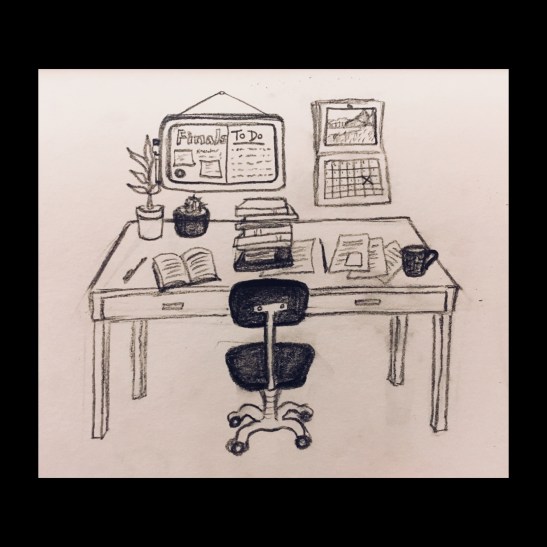
These are my tips for now! I found my old drawing tablet to draw a matching picture for this post and used it for the first time since high school. It doesn’t look too good, but I enjoy the fact that I have some time to indulge in old (and new) hobbies now that it’s summer. Hope everyone is staying safe and looking after themselves during this crazy time.

READ! Disappearing Mothers in Lisa Ko’s The Leavers and Shin Kyung-Sook’s Please Look After Mom

Whitagram-Image

Hello, I’m back after another long absence! Despite it being summer break, I haven’t made posts any more frequently than during the school semester (to be fair, I just survived taking summer Chinese language classes—don’t think it will actually help me in my research, but it was actually a lot of fun!). I want to focus on Asian American literature this summer and have a lot of reading suggestions I hope to make, but I thought I would start with the two books I read right at the beginning of the summer (because I feel like my brain cells are aging and want to talk about them before I forget about them completely). I read these two books in the same week by coincidence, and was initially surprised at how they similar the premise seemed to be at the beginning of the novels. A mother goes missing, and her kid(s) are left with the mystery of what happened and the guilt of wondering if they were bad children. Because The Leavers is an Asian American novel and Please Look After Mom is a Korean novel translated into English, the two soon diverge in plot and overall message. One grapples with what it means to be an Asian minority both as a mother and as a child who is adopted into a white family after his mother’s disappearance, while the other critiques traditional Korean values that make motherhood and marriage extremely oppressive.

Lisa Ko’s The Leavers:

This is a fairly recent book having been published in 2017, and deals with important contemporary issues, from ICE immigration camps, the facade of the American dream, international adoption (especially white couples adopting Asian children), urban poverty, and the narrative of success that seems dependent on college education (the main character is not the good Asian kid aspiring to be a doctor or engineer, but wants to drop out of college to pursue music. While not mentioned in the book, especially because it is his white adoptive parents that want him to return to college, I think the model minority myth makes the paths to perceived success narrower in Asian minds).

What I enjoyed most about the book was that it was refreshing to read about a new perspective (a Chinese boy who gets adopted to white parents), because most Asian immigrant narratives are about first generation immigrants or the children who are caught between their parents who still feel very much tied to their homeland and their own desire to fit in within American society. The character of Deming, later renamed Daniel, has his Chinese heritage severed from him by being adopted by a white couple, forced to move from the multicultural hub of New York City to a small college town where he is the only Asian face around. In the end, he does visit China and finally gets in touch with his real mother. While he experiences a brief moment of recapturing his cultural heritage, he also returns to New York and has to explore new formulations of Asian American identity and experience. He accepts that despite all their flaws, he also loves his white parents and is not so much caught up in the question of what it means to be Chinese-American, only what it is to be himself. If anyone is looking for a recent Asian American novel to read that is also a fairly easy read, I highly recommend this (I’m reading Viet Thanh Ngyuen’s The Sympathizer right now, and boy is it dense, although it is also the 2016 Pulitzer Prize winner! What I’m saying is that The Leavers doesn’t require as much background knowledge about a specific historical time or event, and is not a very formidable book to tackle, which in my opinion makes it a great summer read!)

Shin Kyung-Sook’s Please Look After Mom

This novel is a quicker and more casual read (I think it took about three hours to finish the whole thing), and it’s sentimental and oftentimes cliched. On the other hand, it still moved me at places and brought me close to tears. This is one of the few Korean translated books that have gotten worldwide recognition, although I could see how non-Korean readers might lack the background knowledge about Confucian family values to fully appreciate the text. The ways in which the mother is treated is undoubtedly cruel, but it’s important to see that this isn’t senseless cruelty to be blamed solely on the individual family members. It’s also part of a way of thinking that has persisted for generations, and actually resonated with things my own mother might have experienced in terms of witnessing women who were stuck in self-sacrificing positions within their families or the valuing of sons over daughters. Things are also changing in Korea, so this definitely felt like a book people would resonate with if they were my parents’ generation and older, but I suppose sexism and under-appreciation of family members can always persist (it doesn’t have to though, everyone please be nice to your family and women and all other human beings and the earth in general).

To avoid spoiling the whole book, I will only say that the novel is about a mother of five grown-up children, who after experiencing headaches and possible dementia mysteriously disappears one day (so many book reviews said she was a mother of four, but this past year I’ve been surprised at how many professional book reviews get small details wrong like this. Knock on wood that it doesn’t happen to me if I get to write a review one day!). The whole story is narrated through the perspective of three of these children, the husband, and briefly the mother herself. Again, I don’t think it was the most literary of books, but if anyone is looking to read something to make them appreciate their own mothers more, this is it! I also really enjoyed the experience of reading books with similar themes close together so I could compare the differences (whether cultural or in writing style), and hope I can do this more. Goodbye for now, on to more reading!


READ! The Sellout by Paul Beatty

Whitagram-Image


I survived my first year of graduate school! It’s been about two weeks since I finished the semester, which I’ve been thoroughly enjoying after months of self-doubt, crying, and worrying about final papers. I went back to visit NYC (it’s been exactly a year since I graduated from NYU, and it was strange to walk around the campus again and see all the new restaurants and buildings that have popped up in the area), binge watched shows and movies, and started exercising after realizing all the stress eating resulted in my personal graduate school version of the Freshman 15. As challenging as the past semester has been for me, I was also pushed to explore literature beyond my own narrow interests, and especially enjoyed the novels for my contemporary U.S. political novels class. I wish I had been good about writing down all my thoughts for each book, but I thought I would share at least one of the books I read today, which might be one of the most bizarre books I’ve ever read. I also went to a book sale recently and bought every Asian American novel I could find there, so hopefully when I overcome my laziness, I’ll be writing my impressions of some of them in this blog over the summer. For now though, here are some of my thoughts on Paul Beatty’s The Sellout

Paul Beatty’s The Sellout 

Paul Beatty is an author and professor at Columbia University (despite the possible jabs at academics in his novel). He was the first US writer to win the Man Booker Prize in 2016 with The Sellout, a novel that is narrated by a man who only goes by his last name “Me.” This narrator boasts an almost magical green thumb, growing marijuana and watermelons on a strange bit of farmland in the suburbs of Dickens, which lies on the outskirts of Los Angeles. Dickens, as a predominantly non-white area, is removed from the map in an effort to raise house prices in the surrounding neighbourhoods. Me, while traumatized from his childhood under a strict psychologist father who performed experiments on him in what seems to be attempts to foster awareness about the African American experience, is drawn to helping his community. Finding himself with a self-proclaimed slave who follows him around, Me is caught up in the re-segregation of a bus and school. Ironically, all these crazy changes bring order to this town and puts Dickens back on the map—and while most of the plot points seem to make the book a picaresque novel, it also results in sobering reflection about what it is to better a black marginalized community. As the title forces the reader to consider, is Me really a sellout?

Before taking a class on contemporary political fiction, if I had been asked to name a “political novel,” my mind might have immediately turned to something like George Orwell’s Animal Farm—which is in fact referenced in Paul Beatty’s The Sellout in a satirical parody of the farm commandments: “All Piggers are created equal, but some Piggers ain’t shit” (54). While there are many points in the The Sellout that I might call satirical, and in the case of a book like Animal Farm I am forced to conflate the satirical with the political because of its satirical depiction of a political system, I was surprised to find that Paul Beatty is openly critical of the term satire in his interviews. This is ironic given the many reviews that praise the novel for its satiric genius, and the blurb of my own copy of The Sellout describes the book as a “biting satire” that shows “a comic genius at the top of his game.” When asked the question “Do you think of yourself as a writer of satire?” in an interview with the Paris Review, Beatty responded:

No, not at all. In my head it would limit what I could do, how I could write about something. I’m just writing. Some of it’s funny. I’m surprised that everybody keeps calling this a comic novel. I mean, I get it. But it’s an easy way not to talk about anything else. I would better understand it if they talked about it in a hyphenated way, to talk about it as a tragicomic novel, even. There’s comedy in the book, but there’s a bunch of other stuff in there, too. It’s easy just to hide behind the humor, and then you don’t have to talk about anything else. But I definitely don’t think of myself as a satirist. I mean, what is satire? Do you remember that New Yorker cover that everyone was saying was satire? Barack and Michelle fist-bumping? That’s not satire to me. It was just a commentary. Just poking fun at somebody doesn’t make something satire. It’s a word everyone throws around a lot. I’m not sure how I define it.

In many other interviews, Beatty critiques satire in relation to humor as a roadblock to considering the deeper implications of the thing being made fun of. The ending of The Sellout echoes this preoccupation with the function of humor, where the narrator attends a stand-up comedy night during which a white couple is chased out by the comedian. When the comedian shouts, “This is our thing!” the reader might find this moment comical, perhaps even empowering. Yet Me views the scene with regret, wishing he had “stood up to the man and asked him a question: ‘So what exactly is our thing?’” (288). Beatty seems to warn against humor as something that might blind people from the critique behind the comedic source and intended audience—something the white couple might be accused of being blind to by joining the crowd uninvited and laughing loudly, engrossed by the humor without grasping the implications behind the jokes about black identity. Yet while the comedian blatantly points out their privilege, Beatty invites the reader to do even more than that—not just to point, or to point and wink and laugh, but practice a form of critique that goes beyond identification and laughter.

Perhaps one way of looking at the kind of humor Beatty is using in The Sellout could be humor that doesn’t just come from funniness, but from discomfort. Discomfort is where the book begins, as the narrator sits “in a thickly padded chair that, much like this country, isn’t quite as comfortable as it looks” (3). The outlandish events of the book could be considered funny for how bizarre they are, but any laughter that is induced has to be a nervous one when one is forced to laugh at the sobering issues of slavery or segregation. The novel seems to critique the kind of parody that does the opposite of creating discomfort; the character of Foy Cheshire, who is part of the Dum Dum Donut Intellectuals, is obsessed with uplifting the black community in his own way through re-education. Whether intentional or not, Foy Cheshire’s revised literary classics sound like satirical rewrites, ranging from Uncle Tom’s Condo to The Great Blacksby (166). However, Cheshire’s books are clearly not taken seriously, and they carry the dangerous intent of trying to eliminate any discomfort experienced from reading the original books. Cheshire explains how he first started rewriting these books: “I tried to read this book, Huckleberry Finn, to my grandchildren, but I couldn’t get past page six because the book is fraught with the ‘n-word.’… That’s why I took the liberty to rewrite Mark Twain’s masterpiece. Where the repugnant ‘n-word’ occurs, I replaced it with ‘warrior’ and the word ‘slave’ with ‘dark-skinned volunteer’” (95). Yet these rewrites erase the understanding of the historic context the books were written in, and take away the opportunity to engage with the books through a critical lens. While revision and exaggeration might be closely linked with satire, these acts can be problematic if they simply seek to please or even simply bring laughter over disconcerting critique. Beatty reminds us, “That’s the problem with history, we like to think it’s a book—that we can turn the page and move the fuck on. But history isn’t the paper it’s printed on. It’s memory, and memory is time, emotions, and song” (115). While this passage isn’t explicitly linked to Cheshire’s rewrites, the readers can sense disapproval of Cheshire’s tactic to rewrite and retell history through his books. Ultimately and ironically, it is discomfort and pain that bring positive change to the narrator’s community. Whether we look at Hominy’s slavery, the segregated bus seats, or the fake white-only school that acts as an “on-call Caucasian panopticon,” (209) there is something about discomforting self-awareness that whips people to action. I’m not suggesting that Beatty believes these physical measures are necessary to bring real-life change, but I think there is something to be said about confronting topics that make us squeamish and refusing to reduce them to something merely comical or less anxiety inducing.

I wonder if we can consider this idea of productive discomfort in contrast to the emphasis on empathy in many supposedly political novels and in the liberal discourse of universal understanding and cooperation. Empathy can be an effective form of autocritique and allows you to feel someone else’s discomfort, but it is also often reduced to something optimistic, soothing, even redemptive. If we can see how empathy fails to bring about action and is an individual and perhaps even self-centered experience, perhaps the act of evoking discomfort in other people and refusing to shy away from one’s own discomfort is an alternative way to critically engage with the world. Like Beatty, I’m not quite sure how to define satire. I think The Sellout is still satirical, but does more than depict society’s flaws through a funny and clever approach—it does all that, but it also isn’t afraid to cause discomfort along the way.

The Book History of East Goes West: The Makings of an Oriental Yankee

tempImageForSave

I already did a blog post a few months ago about how much I enjoyed Younghill Kang’s East Goes West: The Makings of an Oriental Yankee, but I thought I would share information about its book history. I wrote this as an assignment last semester and since all the grading is finished for that class I feel at liberty to share in case anyone is doing research on the novel or is simply interested in the complexities of how a book is produced, published, and received (even misinterpreted) throughout time. Also, I’m too lazy to write an original blog post (spring break just started, but I’m already worrying about all the work I need to get done during the break!)

East Goes West: The Making of an Oriental Yankee Production, Publication, and Reception History

  1. Production

Younghill Kang, deemed the father of Korean American literature, had already tasted success from his first book that was published in 1931, The Grass Roof, which depicted life in Korea. Trained in Korean and Chinese classics, he had shown an extraordinary dedication to his scholarly pursuits early on, leaving his provincial town at the age of ten and traveling to Seoul on foot for 16 days against his father’s will to further his education. While studying and working in Japan, he was imprisoned for protests against the Japanese regime in annexed Korea, eventually escaping to America with just 4 dollars in his pocket (New York Times). (In this he is resembled by the protagonist of both The Grass Roof and East Goes West, Chungpa Han, who arrives in New York with the same meager fortune of 4 dollars and lofty dreams of a college education in the US). After receiving graduate degrees from both Harvard University and Boston University and participating in various translation projects, Kang taught comparative literature at New York University and began writing in English for the first time. The Grass Roof was published with the help of his friend and NYU colleague Thomas Wolfe, who connected Kang with Maxwell Perkins, his own editor at Scribner’s and discoverer of other great writers like Ernest Hemingway and F. Scott Fitzgerald. Kang’s first book was extremely well received, highly praised by other writers like H.G. Wells and Rebecca West, with the latter exclaiming “After Mr. Kang, most books seem a bit flat… What a man! What a writer!” (qtd. in Lee, 375). The Grass Roof was adapted into a children’s book called the The Happy Grove in 1933, and was even considered for a Hollywood motion picture with the agent, rather ironically, writing to Scribner’s about the “considerable interest being shown at present in Chinese stories” (qtd. in Lee, 406). All this success with his first book paved the path to his second book East Goes West.

In light of all this recognition, Kang pitched the idea for a sequel he initially titled “Death of an Exile” in 1931, the same year The Grass Roof was published. His proposal in application for a Guggenheim Foundation fellowship was rejected, resubmitted, and finally accepted in 1933, making him the first Asian individual ever to receive this fellowship. In the nationality section of his first application in 1931, he wrote: “In practice an American and permanently located here, but debarred by the United States Government from naturalization as an Oriental. I am not a citizen elsewhere, since the Korean Government was dissolved [by Japan] in 1910” (qtd. in 376). Kang’s reflections on citizenship—or his lack of citizenship status—is a theme that reoccurs in East Goes West, which is set in the 1920s just as the Immigration Act of 1924 and the subsequent Asian Exclusion Act was passed. This meant that while the character of Chungpa Han grappled with how to become a “Yankee,” becoming a legal American citizen was not a possibility for him or for his creator. Kang renewed his Guggenheim fellowship in 1934 and spent those two years first in Rome, and then Munich to write what would become East Goes West, interestingly undertaking the project writing about an immigrant’s conception of America while he himself was oceans away. Of his time in Munich, Kang humorously noted “In Germany I was more popular than the high-nosed American in the Hitler thirties, because I could be mistaken for a Japanese, the only race descended from the gods outside of the Aryans” (qtd. in Lee, 406). Being mistaken as Chinese and Japanese throughout his life, and without Korean or American citizenship, Kang had the complexity of his own identity to think about as he brought his fictional alter ego Chungpa Han to life.

When Kang returned to America and presented his manuscript of “Death of an Exile” to his editor, Maxwell Perkins, he received several editorial suggestions. Perkins suggested the work be “more palatable for Euro-American audiences” and wanted a story of “successful assimilation,” to be signaled more overtly by a suggested romance between the protagonist and an American girl. This demand for confirmation of “successful assimilation” was also targeted at the book’s ending, which is ambiguous and hard to read as hopeful when it concludes with a nightmare about entrapment and chaos (qtd. in Lew, 174). Kang revised the manuscript by cutting about 150 pages, but kept the ambiguous ending. In line with the editor’s note about “successful assimilation,” the manuscript’s initially somber title underwent several changes. Perkins suggested “The Americanization of Younghill Kang” and “Rebirth in America,” both indicative of his agenda for the book as a narrative championing Americanization. Thomas Wolfe offered “Yankee out of Korea” and “Oriental Yankee” as other possible titles (qtd. in Lee, 397). Perkins’ editorial suggestions were largely credited to his concern about marketability rather than necessarily censorship, as he himself claimed it was in “order to sell [the novel] at a suitable price” (qtd. in Lew, 174), which Kang actually critiques in his book through Chungpa Han’s employment as a salesman of cheap encyclopedias, a job that fills him with disgust. Chungpa Han unexpectedly finds himself with this job because the owner is excited about the narrative he can project onto the Korean man, enticed by possibility of sympathy and fascination from potential customers when faced with an Oriental trying to fund his Western education—something many readers have seen as a commentary on capitalism and materialism that was increasingly studied in this historical moment (Roh, 96). Indeed, in Kang’s Guggenheim Foundation fellowship application of 1931, he clearly stated his purpose of writing the book not as an endearing autobiography of one man, but as “being the reflection through the hero’s eyes of this mechanical age, of American civilization . . . also a history of his spiritual evolutions and revolutions while love-sick, bread-sick, butter-sick, education-sick, [of someone] lost and obliterated in the stone-and-steel jungles of New York City” (qtd, in Lee, 380). Kang’s own words suggest that while writing this book, his aim was not to please or entertain, but sketch and even critique a moment in history with a degree of cynicism.


  1. Publication

            The book East goes West: The Making of an Oriental Yankee was thus published by Scribner’s in 1937, New York for the price of $2.75, as well as in London that same year (World Affairs, 263). There are only 3 separate editions of East Goes West to date, starting with Scribner’s 1937 edition, followed by one in 1965, and another in 1997. The 1965 edition was by Follett Publishing, which also reissued Kang’s first book The Grass Roof in 1966. The second edition of East Goes West did not see as much attention as the reissued The Grass Roof, which was noted in multiple Korean history journals like The Journal of Asian Studies and Pacific Affairs without mention of the sequel. While The Grass Roof was translated into multiple languages during the 20th century ranging from French, German, Czech, Vietnamese, and of course Korean, East Goes West does not seem to have been translated until the year 2000 when the Korean edition was published. Reflecting this disparity of treatment between Kang’s first and second books—arguably a series but often read independently due to the six-year gap between their publications as well as their differences in subject matter and tone—only the 1997 edition of  East Goes West included an introduction in contrast to the early editions of The Grass Roof which included a flattering introduction by author Rebecca West.

The Kaya Press edition from 1997 comes with an “Afterword” by Sunyoung Lee, who did extensive research on Kang’s life and collected valuable secondary sources from unpublished archives, such as letters from Scribner’s archives and materials from the Guggenheim Foundation files. This Kaya edition is credited for the successful revival of East Goes West, which was mostly forgotten by the time of Kang’s death. This edition was also reprinted in 2006, and many subsequent works of criticism cite Lee’s “Afterword” for pieces of Kang’s biography and other insights. Walter K. Lew shows disapproval of this edition, claiming “The Kaya edition of EGW, printed in 1997 over the strenuous objections of the Kang estate and its agent, is error-ridden in both its main text and supplementary material” (Lew, 185). However, this view seems to be particular to Lew and isn’t seen much elsewhere. A1999 review of Kaya’s edition states “we owe a great debt to Kaya for reissuing this brilliant novel and for its addition of “The Unmaking of an Oriental Yankee,” an afterword by Sunyoung Lee… Every once in a while a book comes along that, even if not destined to be, deserves to be a classic. Younghill Kang’s East Goes West is such a book” (Lowitz, 203). This quote seems to be telling of several things—one, that despite its initial publication by the famous Maxwell Perkins through Scribner’s, East Goes West deserves yet is not quite treated as a classic at this point in time. The fact that the most recent available edition of East Goes West is also by Kaya Press is important to consider, as Kaya Press is respected but not a particularly big publisher, as an independent non-profit publisher founded in 1994 focusing specifically on Asian and Pacific Islander diasporic literature. Kaya Press is currently based in the Department of American Studies and Ethnicity at the University of Southern California and its edition of East Goes West might be considered for niche markets rather than reflective of a mainstream demand for the book.

Interestingly, another publication of East goes West is planned for May 2019, as announced by Penguin Classics. This publication is categorized by Penguin as “Fiction Classics,” and features a new foreword by Alexander Chee. Their online blurb for the upcoming book praises East Goes West as “a masterpiece not only of Asian American literature but also American literature.” Perhaps this is a sign of a change since Lowitz’ review of the 1997 Kaya edition, which tentatively claimed that East Goes West “deserves” to be a classic rather than simply recognizing it as one. More about the reception history of this book is to follow, but the original manuscript of the book can now be found in the Huntington Historical Society files, along with photographs and archived articles about Kang and his work (Lee, 424).


  1. Reception and Legacy

            The initial reception of the East Goes West was positive, but not particularly fitting to Kang’s vision of the book as hinted at by his statement of intent in his Guggenheim Foundation fellowship application. A World Affairs review from 1937 states that the “engaging autobiography of a young Korean” has “so much of human interest and episode, so much of a delightful personality, it will be impossible to do less than read it all” (World Affairs, 263-4). Although expressing favor towards the book, the fact that the review calls the book an autobiography even though it clearly has a protagonist with a name different from Kang’s seems to dismiss the unique form of the novel. Moreover, it’s surprising to see that the book is described with such a light-hearted tone, suggesting the reader could expect “delightful” entertainment from the book rather than darker social critique that is evident from the tragedies depicted in East Goes West. The review concludes with what seems to be the most satisfying piece of information: “We are told by the publishers that Mr. Kang was successful in winning his lady-love, and that he is now an assistant professor in New York University as well as on the staff of the Department of Eastern Art in the Metropolitan Museum” (World Affairs, 264). This conflation of the author and narrator seems shift the focus from the actual message of the book to the facts of Kang’s own personal success, implying that for the character of Chungpa Han, “successful assimilation” as Kang’s editor Perkins wanted to see was fully achieved.

A 1937 book review by Katherine Woods in the New York Times similarly ignores the defining fictional form of the book, stating that the “story attracts and holds the attention as if it were a novel… but of course, East Goes West is not a novel. It is the candid record of ‘the making of an Oriental Yankee’ as its subtitle states; and its author has been so successfully Americanized as to become Assistant Professor of Comparative Literature in New York University and a member of the staff of the Department of Far Eastern Art at the Metropolitan Museum.” Woods went on to say that Kang “is no cynic. He never picks up a big stick. He merely tells us what happened, good and bad, the sad and the merry, and always alive.” This lack of outside acknowledgement of Kang’s creative artistry or his criticisms of America slowly transitioned into lack of interest. Elaine H. Kim describes how “Kang himself considered the second book more important, but The Grass Roof attracted more critical attention. Reviewers may have preferred the more exotic earlier book, which is set entirely in Korea, because East Goes West presents an unflattering view of the underside of American life from the perspectives of people locked out by the color bar” (“Roots and Wings”, 3). Years before this, Kim pointed out that despite Kang’s seeming success, “Not one of the characters in Kang’s East Goes West achieves his American dream (“Defining Asian American Realities through Literature,” 96). This demonstrates a shift in understanding of Kang’s book as one about optimism for American assimilation to one of a cynicism that the 1937 New York Times review failed to recognize.

East Goes West became more generative of various works of criticism at the turn of the millennium, highlighting some of the social critique Kang was trying to make. Aside from less optimistic insights into the Asian immigrant’s experience reflected in Elaine H. Kim’s work, the book has also been examined through gender and sexuality studies by Sau-ling C. Wong and Jeffrey J. Santa Ana, and through the lens of African American studies. In the article “The African-American Presence in Younghill Kang’s East Goes West,” Kun Jong Lee points out that “Kang’s East Goes West is unique in its inclusiveness of ethical/racial representation in Asian-American literary history… Of the many ethnic Americans portrayed in East Goes West, African-American characters loom large and have drawn most of Kang scholars’ critical attention “(329-30). Lee goes onto say that “Kang’s fiction is shot through with African-American culture, literature, and historical figures” and that scholars “should take into account not only the African-American characters but also African-American culture and literature that permeate the narrative” (331). Here, Lee first acknowledges that Kang’s work is “fiction,” and secondly raises questions about parallels and influences between different ethnic groups and literatures that are especially relevant to my own interests. Arguing that Kang shows a sense of solidarity with the African American characters in his book, readers could think about what such solidarity could mean when there is such division and racism among different ethnic Americans today. A prominent example that comes to mind is the shooting of the unarmed Akai Gurley by Peter Liang in 2014 and Liang’s subsequent indictment. In the following weeks over 3,000 members of the Chinese American community rallied together in New York to express their outrage at Liang’s seemingly unfair exclusion from (white) institutional power.

Although there doesn’t seem to be much discussion about the form of East Goes West, I think it would be interesting to move beyond the binary labeling of the book as fiction or non-fiction and think about what a fictionalized autobiography means. With the modern popularity of the memoir as a genre, which often straddles the line between fiction and non-fiction, we should begin to consider how an autobiography typically functions as a political tool or assertion of a rather American notion of individuality while some parts are strategically fictionalized. I think the book could fit into conversations concerning accusations that some Asian authors use orientalism to market their work, and into the debates about authenticity that always come up when dealing with elements of non-fiction—think Frank Chin’s criticism of Maxine Hong Kingston. East Goes West could also be paired with other modified autobiographical genres in Korean American writing, such as Dictee by Theresa Hak kyung Cha; perhaps the hybridity of genres in the context of Korean American texts could reflect the especially confusing nature of Korean nationhood, overshadowed by Japan or China and even more complicated by the split between the two Koreas and dependence on U.S. intervention.

Ultimately, the legacy of East Goes West is a growing one, and we can hope to see more scholarship on Kang’s work. The legacy of Kang rather than specifically East Goes West is more prominent, as he was the first published Korean American author and seen as a pioneer of Asian American literature as a whole. It’s interesting to note that although it might have been due to the popularity of The Grass Roof rather than East Goes West, Kang actually became an American citizen through a private petition by his friends in 1940, over a decade before other Korean immigrants could be granted American citizenship. In the series of recommendations for Kang’s citizenship, the author Louis Adamic stated this: “Younghill Kang is, emotionally and intellectually, identified with America; his interests in America, in fact, are greater—in many respects—than those of all too many native Americans” (qtd. in Lee, 391). Kang being granted citizenship seems to prove the message that many earlier reviews misread from East Goes West—that the American dream was possible. However, this may not be quite a success story, as Kang did not produce anything substantial after East Goes West. While Kang settled and succeeded in America, he showed clear love for Korea through his visits, articles, and political gestures. Although Kang did work on some translations, especially a book of Korean poetry that was not well received, James Wade pondered upon Kang’s silence after the publication of East Goes West. Wade speculated that perhaps how East Goes West was received—not negatively, but perhaps incorrectly—might have been disheartening to Kang, and that Kang too felt the limits of the American dream: “somewhere in his middle years those vaulting aspirations were realized to be impossible… if he could not be the greatest, he would not settle for second-best: for him it was genius or nothing. Rather than compromise those ambitions cherished from childhood, he fell silent and saw his career ebb away into relative obscurity” (59). This is mostly speculation, of course. In any case, Kang was an extraordinary man, and East Goes West was an extraordinary book for its time even if the recognition didn’t come until later. As the anticipated Penguin edition suggests, East Goes West is now on its way to becoming recognized as a classic piece of American literature.


Works Cited

“East Goes West by Younghill Kang.” PenguinRandomHouse.com, https://www.penguinrandomhouse.com/books/606933/east-goes-west-by-younghill-kang-foreword-by-alexander-chee/9780143134305

Jones, F.C. “The Tragedy of Korea.” Pacific Affairs, vol. 41, no. 1, 1968, pp. 86–89. JSTOR, JSTOR, www.jstor.org/stable/2754721.

Kim, Elaine H. “Defining Asian American Realities Through Literature.” Cultural Critique, no. 6, 1987, pp. 87–111. JSTOR, JSTOR, http://www.jstor.org/stable/1354257.

—“Roots and Wings.” The Signur Center Asia Papers: Korean American Literature. George Washington University, 2004.

Lee, Kun Jong. “THE AFRICAN-AMERICAN PRESENCE IN YOUNGHILL KANG’S ‘EAST

GOES WEST.’” CLA Journal, vol. 45, no. 3, 2002, pp. 329–359. JSTOR, JSTOR, http://www.jstor.org/stable/44325107.

Lee, Sunyoung, “Afterword.” In East Goes West. Chicago: Follett, 1965. Reprint 2006. 373-406.

Lew, Walter K. “Grafts, Transplants, Translation: The Americanizing of Younghill Kang.” Modernism, Inc.: Body, Memory, Capital. New York, NY: New York UP, 2001. 171-190.

Lowitz, Leza. “Manoa.” Manoa, vol. 11, no. 2, 1999, pp. 201–203. JSTOR, JSTOR, http://www.jstor.org/stable/4229795.

“Other Books Received.” The Journal of Asian Studies, vol. 26, no. 4, 1967, pp. 771-773, JSTOR, JSTOR, www.jstor.org/stable/2051317.

Roh, David S. “Scientific Management in ‘East Goes West’: The Japanese and American Construction of Korean Labor.” MELUS, vol. 37, no. 1, 2012, pp. 83–104. JSTOR, JSTOR, http://www.jstor.org/stable/41440714.

Wade, James. “Younghill Kang’s Unwritten Third Act,” Korean Journal 13.4 (1973): 60.

Wong, Sau-ling C., and Jeffrey J. Santa Ana. “Gender and Sexuality in Asian American Literature.” Signs, vol. 25, no. 1, 1999, pp. 171–226. JSTOR, JSTOR, http://www.jstor.org/stable/3175619.

Woods, Katherine, “Making of an Oriental Yankee,” New York Times book review 17. Oct. 1937:11

“World Affairs.” World Affairs, vol. 100, no. 4, 1937, pp. 263–264. JSTOR, JSTOR, http://www.jstor.org/stable/20663027.

“Younghill Kang, Writer, 69, dies.” New York Times, December 14, 1927, 14.

Asian Freaks in Nineteenth Century American Freak Shows

Processed with VSCO with fp2 preset

It seems my New Year’s resolution to write blog posts more often has been quite quickly abandoned (but is it really a New Year’s resolution if you don’t actually fail to follow through, and realize there is no magical self-motivation that appears with the change of a number on a calendar?) I’m already well into my second semester of grad school, and I’m drowning in readings and work. Luckily, all my new classes are interesting, ranging from Elizabethan women’s writing, comparative rhetoric, and contemporary political novels—so hopefully I get to talk about some of the things I’m learning in class in other blog posts. It’s touching how bottomless human hope can be despite constant failure.

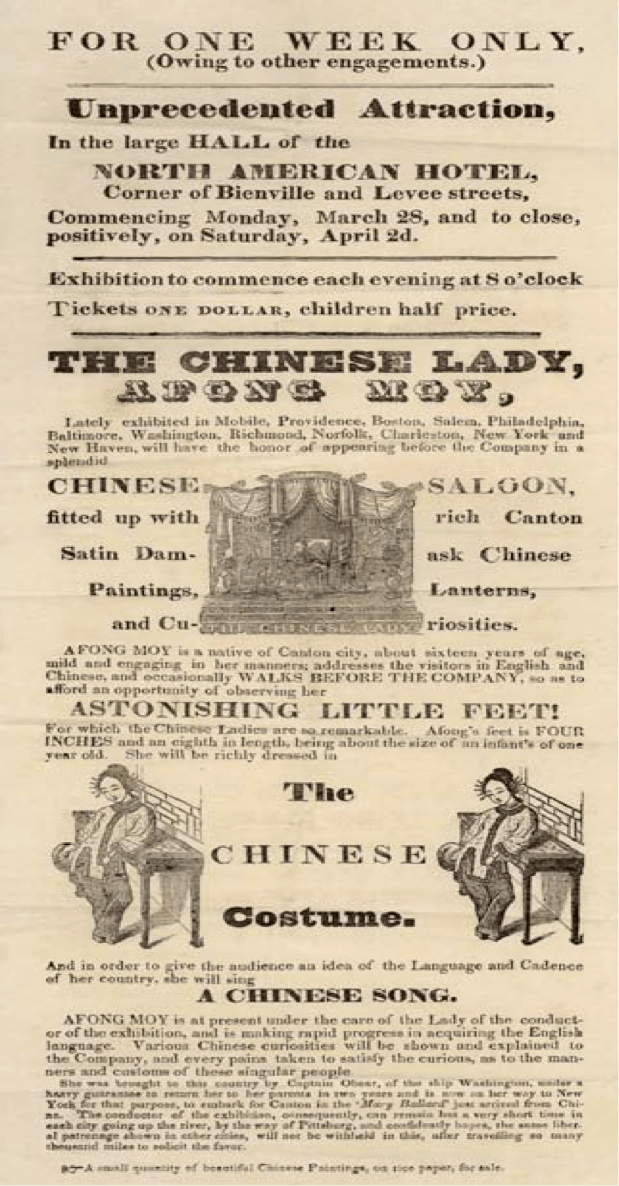
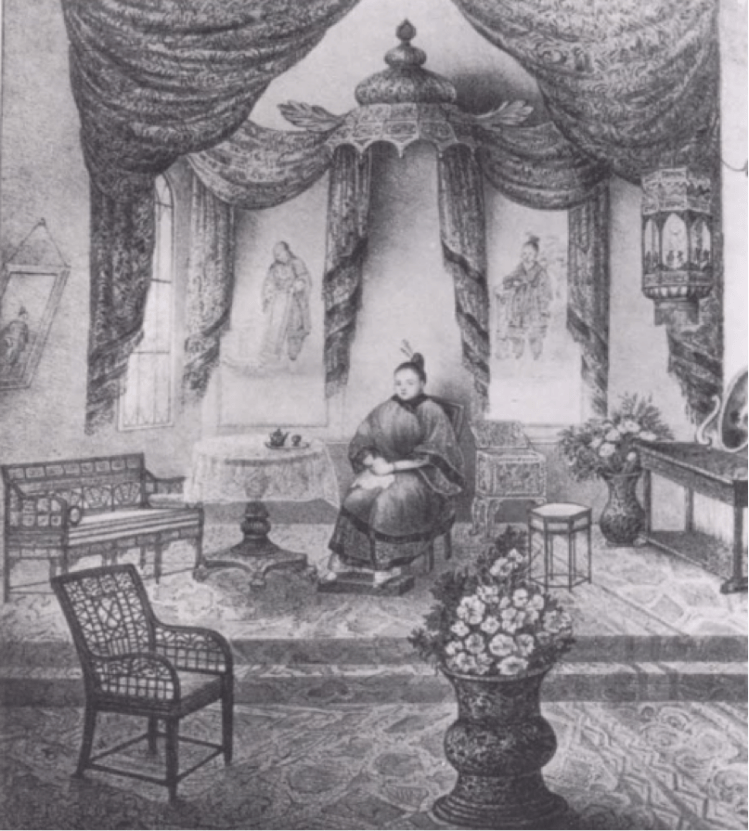
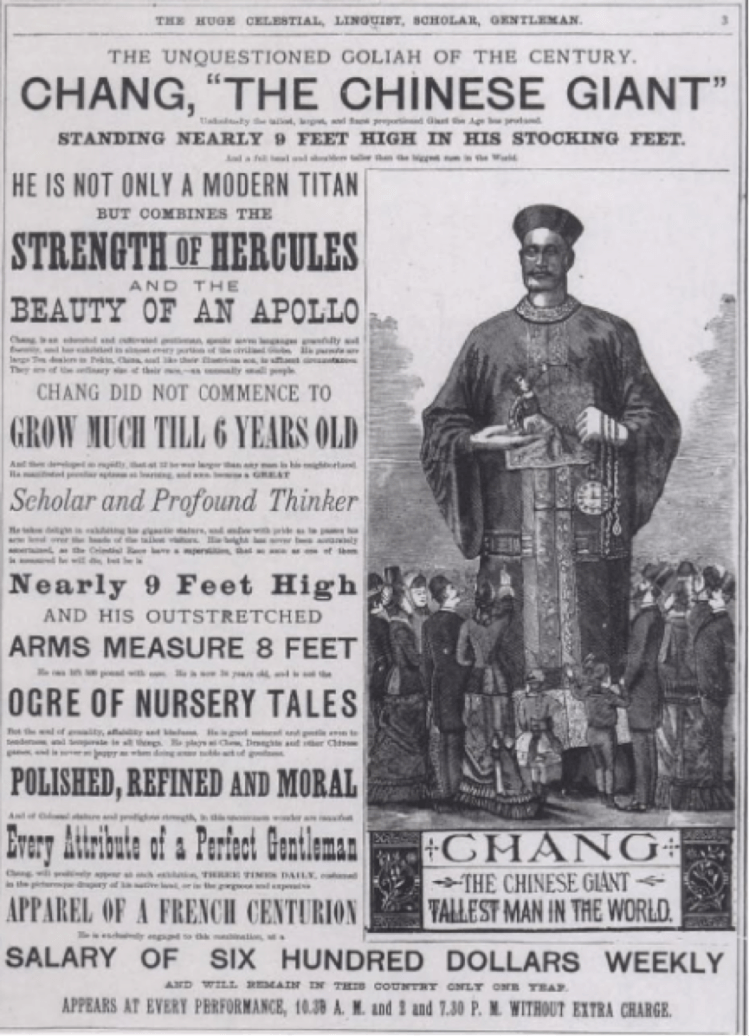
Today though, I want to return to something I worked on last semester. A final paper I wrote last semester explored the different Asian freaks on display in American freak shows during the nineteenth century, through a lens of Asian American studies and disability studies. Because I was fascinated about what I found, I thought I would share a little about them (I didn’t know about these figures before my paper, so hopefully someone else gets to learn about them for the first time as well). I’ll try to introduce these figures in general without going  into too much detail about the arguments in my paper, because I hope I can further my project or potentially seek publication for this project in the future. In short though, I argued the possibility of what I call a crip kinship that these Asian freaks were able to facilitate through their disability/deformed bodies, which allowed them moments of identification that crossed social and racial boundaries.

Before I go into each individual freak, I want to give a little background about freak culture because I would hate to sound condescending or disrespectful to these figures. In the class I wrote the paper for we had to think a lot about how to give back agency to the freaks, when they were often taken advantage of and put on display for their physical differences to highlight their monstrosity (I’m not using the term “freak” in a derogative manner as we might understand it today. There is actually a lot of scholarship about freaks and some even theorizing how embracing the label can be empowering. Check out scholars like Garland Thompson, Robert Bogdan, and Elizabeth Grosz who all have good books on freak culture). These people, ranging from bearded ladies, giants, and those missing limbs or with unusual body proportions, were put on display on freak shows for the public to enjoy—an enjoyment that stemmed simultaneously from disgust and wonder. Although some of these freaks were paid well, they were still gawked at and unable to live private lives. From the various men who tried to profit off freak shows, P.T. Barnum was the most infamous of the freak show managers. He’s the subject of the film the The Greatest Showman, which I haven’t watched but feel hesitant to do so given the celebratory nature of the film. His obvious greed and lies that went into crafting narratives for the freaks visible from historical records mean we should be careful not to glorify him and his supposed genius. Yes, he was a great businessman, but that doesn’t mean he was morally good! (As an example, he purchased the slave Joice Heth as one of his early exhibits and claimed she was over 160 years old and a nanny for George Washington. He made up several hoaxes to increase the hype and eventually subjected her to an autopsy after her death, a common practice for these freaks who weren’t left alone even in death). Luckily, freak shows were deemed tasteless and began to die out past the 19th century, although we could argue we continue to have fascination with invading the privacy of certain individuals through modern day spectacles like reality tv shows.

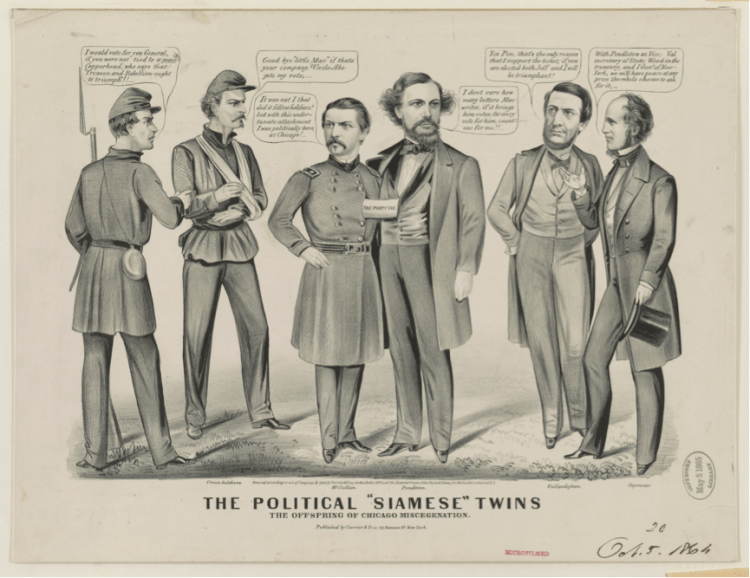
These freak shows, while seemingly for pure entertainment, made a huge impact as America was only just beginning to forge itself as a nation. They were tied to the formulation of nationhood and societal categories, from race, economic class, and heteronormativity. Stories were fabricated for each freak, and people like P.T. Barnum was careful to label certain freaks as savages and un-American based on the nature of their physical difference—even when they had in fact been born and raised in America. In contrast, freaks like Tom Thumb who enjoyed popularity as a man of elegance and class was associated with England, then quickly claimed as American as his success continued. Lower class workers and immigrants made up the bulk of the audience who paid to see these shows, with the consolation that they were superior to these freaks—that they were normal citizens by contrast. These freaks made their mark on American cultural production that continues to this day. Ever heard of the term “Siamese twins”? This came from Chang and Eng, who were ethnically Chinese conjoined twins brought over from Siam to be displayed. They actually went on to break away from their manager, and obtained American citizenship during a time Asian immigrants were scarce and definitely not granted citizenship (this was before the Civil War, and in fact during the war newspapers often used the conjoined twins as a symbol of the North and South who needed to reconcile and accept their union. Given how racist American society was at this time it’s astounding these Siamese twins were used to champion American nationhood and unity). They even owned slaves and had 21 children altogether, and their descendants still have annual conventions today. While it’s problematic they owned slaves, this just shows how they wrote themselves into white citizenry and how artificial the legal and cultural criteria for citizenship can be. References to Chang and Eng appear in literature everywhere, from stories by Mark Twain, an allusion in Moby Dick, and of course in a lot of Asian American literature that grapple with a hyphenated identity or feelings of double-consciousness. Chang and Eng, along with other Asian freaks, affected both American history as a whole and Asian American identity in ways that we aren’t even aware of but are all around us. After reading about Chang and Eng, I began to see them mentioned everywhere (Maxine Hong Kingston and Cathy Park Hong both mention them in their work!).

For further context about why these Asian freaks were so significant was that although they were subject to alienation, they were generally and uniquely viewed positively amidst growing hostility toward Asians. By positive I don’t mean they escaped racist stereotypes and condescension, but they faced relatively harmless curiosity in comparison to the phenomenon of the Yellow Peril brewing in the nineteenth century. The Yellow Peril was the fear of invasion of Asians in the West, a fear so strong that by 1882 the U.S. passed the Chinese Exclusion Act, the first time the nation tried to keep out a particular group of people through legal means. Asians were portrayed as scheming, immoral, and sexually deviant. Asian immigrants were depicted as parasites, and Asia began to be associated with disease and disability (for example, along with the parasitic imagery that apparently threatened to make America sick—I can pull up direct sources if anyone is particularly interested—Down syndrome during this century was labelled Mongolism. Although Asian Americans are often deemed the “model minority,” a problematic way of thinking in itself which you can read more about here, it’s important to remember Asian American history and the struggle for acceptance). In line with the tendency to link Asians with disability, most of the Asian freaks were so fascinating because they were deformed, if not disabled. Yet despite this negative association with physical difference, I think these Asian freaks tried to imagine something other than the dystopian vision Westerners had of Asians taking over (the term Yellow Peril is first thought to be coined through a prophetic dream by Kaiser Wilhelm II, which he commissioned into a painting). The Asian freaks were able to help the public imagine a coexistence with Asian bodies amidst growing denial this was possible, much less desirable.

untitled

untitled1

The first Asian freak I’d like to introduce is Afong Moy, believed to be the first Chinese woman to ever set foot in America in 1834 (reading suggestion: Marginal Sights: Staging the Chinese in America by James S. Moy). Her exhibition consisted of her sitting in a room full of “Chinese” finery and occasionally being forced to walk across the room on her bound feet, objectified in a way that placed her along with the Chinese paintings for sale (claiming the “Oriental” aesthetic while failing to value the actual people, doesn’t that sound all too familiar?). While we get little of her own voice—she didn’t speak English—we can find a lot of newspaper articles from the time fascinated with her fairy feet, or monstrous feet, depending on the account. Some spectators even found sexual appeal in her limited movement and her seeming exoticism. What is most interesting to me, however, is the cross-identification she allowed for those that came to see her. This could have been across class, as lower class spectators were encouraged to partake in the falsely crafted fantasy of being invited to join a noble Chinese woman in her extravagant Chinese parlor. Moreover, at the time there was much speculation about her bound feet being similar to corsets that Western women were forced to wear for the sake of beauty, allowing women to identify and perhaps even sympathize with her in a way that was extraordinary given the alienation of Asian bodies to happen nationwide elsewhere. She eventually disappeared without a trace, but similar Chinese women with bound feet followed (one of Barnum’s exhibitions was the “Chinese Family,” which was a group of Chinese individuals who weren’t even blood related but placed together because of their ethnicity. While problematic, perhaps in a way it forces us to conceptualize the family in non-heteronormative ways—you don’t need a mother and father and children to piece together a family. In this particular case, the woman was the centre of attraction with her bound feet, acting as a head of this fabricated family and the star of the show that could be read as disrupting patriarchal notions of family).

9781469642338

untitled4

Next were the Siamese twins Chang and Eng, who often signed their letters collectively as ChangEng (they first arrived in America in 1829, achieved citizenship in 1839 and lived very much in the public eye until 1874). They were a sensation, and thought to be one of the most talked about figures from nineteenth century America in history. They sparked philosophical questions about individualism, something that would become a defining American characteristic  (the brotherhood they shared was admirable, but many speculated how horrible it must be to be attached to someone else and how they complicated notions of individual subjectivity. Note that the brothers were on very good terms and refused multiple times to be surgically separated). Chang and Eng pioneered the way to what could be considered a successful Asian immigrant story by achieving citizenship, owning property, and enjoying financial success, even though there are problematic aspects of their lives like their relationship to slavery. There are so many books on the lives of Chang and Eng I won’t go into too much detail here, but I suggest The Lives of Chang and Eng: Siam’s Twins in Nineteenth-Century America by Joseph Andrew Orser or Chang and Eng Reconnected: The Original Siamese Twins in American culture by Cynthia Wu that does a lovely job of tracing the cultural impact they have on Asian American literature even today.

88db053c6b80e3568931dd7130911f85

untitled2

Finally, and possibly my favourite, is Chang the Giant. Presented as a Chinese gentleman, he toured England and other parts of Europe (as many of the other freaks did too, though most ended up back in America) before coming to the U.S. around 1882. Contrary to the savage imagery associated with Asians in the Yellow Peril, or the immigrant laborers who flooded into the U.S. to help build railroads seen as unwanted competition by other workers, he was depicted as a scholar who could speak several languages and was a friend to all. In fact, he was so popular with the ladies that people were constantly asking about his availability, and his initial Chinese wife he toured with is thought to be a fake one to keep all the romantic interest at bay. Chang supposedly has his own autobiography from 1866, though it’s reported to be a translation from Chinese and most likely a fictional account someone wrote as a pamphlet to hand out at his exhibitions. From this autobiography though, which suspiciously sounds like propaganda, he champions everlasting friendship between the East and West. He may have helped the public momentarily see a possible friendship and coexistence with those from the East, even amidst growing hostility against Asian immigrants. Eventually, he retired and married a white Australian woman (yay transpacific relevance!), moving to China and then England to spend the rest of his days as the owner of a teashop. (Fun fact, he was often exhibited with a “Chinese dwarf” called Che Meh for contrast, who apparently wasn’t even Chinese but a Jewish man from England who paraded around in Chinese garments).

To my knowledge, these three were the most prominent Asian freaks on display in the nineteenth century. I realize that the Asian freaks here are all Chinese (the Siamese twins were said to be ethnically Chinese even if they were brought over from Siam), but that is because of the little contact America had with other Asian countries at the time— Americans often conflated Asia and China during this period anyway—and there were no other Asian freaks from different backgrounds that I could find (I would love to learn more about other historical Asian “freaks” or performers in the future, if they do exist!). I wrote a 30 page paper about these three particular figures so I could ramble on for a lot longer on Chang and Eng, Afong Moy, and Chang the Giant alone, but I hope they were interesting to anyone reading this because they sure were to me. Although my research interests mostly lie in contemporary literature, I found it really fun having to sift through old archives of photographs, pamphlets and news articles.  And I hope we can think about these figures not with interest in them because they are spectacles to gawk at, but for the impact they had on American culture and how we can find places of their own agency in the ways they tried to make a living for themselves in America through various strategic modes of identification. Moreover, I love seeing the long and complicated history behind Asian immigrants and Asian presence in America, which I feel is often limited to the twentieth century when an Asian American identity truly began to form.


Thoughts on End of the First Semester

tempImageForSave (2).JPG

Hello, nonexistent readers! I’m returning with a long-delayed post now that I’m on break. This means I finished my first semester in graduate school, with feelings of relief and lingering anxiety. I didn’t do quite as many blog posts throughout the semester as I had intended, but as the year reaches its end perhaps I can make a new year’s resolution to improve on how frequently I post (I commit only to making the resolution, as following it is another matter). 2018 has been a strange year for me, as I’ve spent it at two different institutions: first in my undergraduate school located at the heart of NYC before graduating and spending the summer still reeling from this life milestone, and now in graduate school in a small college town. This change from an urban to rural setting has been disorienting, but not more so than the shift from being an undergraduate student to a graduate one. So what are my thoughts?

In truth, moving to a new place and leaving behind old friends is always a difficult experience, but I’m surprised how well I adjusted given how apprehensive I was about moving away from a big city. I think it really depends on what kind of person you are, but since I’ve had to spend most of my time indoors reading I didn’t actually miss all the amenities of city life as much as I thought I would. The small town life has forced me to start learning to drive, and I did learn to cook a lot more now that I don’t have the ease of stepping out of my apartment to streets full of restaurants. I’m also living alone in my own space for the first time after years of having roommates. It’s a reminder that I’m far away from many of my old friends and that I can no longer get away with the dorm-style mess and being ill-equipped with kitchen utensils which often come with being a college student. But all in all, I feel like it’s forcing me to become a real adult, both a frightening but also an exciting prospect.

Aside from the real life aspects of moving to a new place, however, most of my need for adjustment came from having to understand I was now a graduate student. I’m still trying to figure out what that means, but this is what I have noticed so far in my first semester. First, the class size took a while to get used to—with seminars of no more than 12 students at various stages of the program, the whole class was structured around discussions of readings (often a devastating amount when you’re balancing multiple seminars and reading groups). As engaging and interesting as it was, for someone who hates speaking in front of people, three hours of sitting in a circle and having to sound intelligent often seemed more like a personal nightmare. I’m a little bit ashamed to admit (though I shouldn’t be) that I have on occasion sat on the bus home from class feeling dumb and close to tears. Moreover, with such small cohorts it’s difficult not to feel competitive every time you hear someone talk about going to a conference, or all the books they have out from the library. I’m not saying that other people knowingly urge competitiveness, and in fact everyone here has been very supportive, but the constant self-doubt and spells of imposter syndrome can make you start comparing yourself to everyone else. (Also, at every department event, party, or conversation someone mentions Foucault or some other theorist and it feels like a secret test of how well-read you are). More so than at any point in my undergraduate career, I’ve had to question if this field was really for me. I feel like an undergraduate degree is an exploration of your interest, but a graduate degree (and not a professional degree that is aimed at helping you get a job outside of academia) is a commitment to your field. And commitment can be scary (you know it, all you millennials and relationship-avoiders).

Another thing that relates to this idea of commitment that marks graduate school life that I’ve had to wrap my head around, and I’ve heard other students talk about, is work versus student life. I’m lucky to have a generous fellowship/stipend, but I also recognize that it means I have a responsibility to the institution to do my best. Since we are being paid to go to school (and teach, although I’ll only be starting that next year), we have to approach graduate school not just as our own education but a duty to the whole institution as well (although we can still critique such institutions). I felt this most strongly recently when there was a controversy with a few professors in our department, and we as graduate students were actively part of departmental politics by signing statements promising to make the department a safer, all-inclusive space. We are no longer just students blind to what goes on behind the scenes, although that is easy to happen, but also a member of the community where intellectual input is not just encouraged but somewhat necessary. The pressure of having responsibilities beyond yourself for your education can be hard to come to terms with, but it’s also encouraging to remind myself of this whenever I’ve had moments questioning why I was here when most of my friends moved onto the workplace. This is kind of my job now, reading and writing and questioning my intelligence (and teaching, which I’m excited for)! Other than the fact I don’t make an impressive salary, it’s an amazing thing to get paid for and I’m grateful.

So yes, throughout the semester I’ve felt stupid and unworthy, and I acknowledge academia can be an incredibly lonely process (the most common advice I’ve heard here is to get a good therapist, or to ensure you have a pet or significant other to keep you sane). But despite all this, when I feel the excitement of reading something that moves me, or come across something in my research that genuinely interests me, or finally overcome my writer’s block and am able to tease out the finer details of an argument, I know I’m in the right place—for now. In moments of despair about my intelligence, I’ve also had moments of elation learning so many new things (which I hope to discuss in my other blog posts). I don’t want to paint graduate school as terribly difficult, and it probably varies according to the field, but I truly appreciated all my mentors and other upperclassmen giving their honest opinions about their experiences. It helped me to hear their struggles and warnings too, because it’s important to grasp the reality of things and think about how to overcome these difficulties. So I hope that as I continue my journey in graduate school, I can pause to assess my struggles in this blog as well as talk about the wonderful things I learn or the cool books I read.  If not helpful to anyone else, I hope that I at least can return to my past struggles and trace my growth (although even professors tell me imposter syndrome is a life companion). If all goes well (as in I don’t fail out), I have 5 and a half more years of endless readings and writing (insert scream here). I know I’m only just beginning with my first semester over, but I’m excited to see where I go (and at the end of it all, write my “Thoughts on End of My Last Semester Ever” post)!


READ! X-Marks: Native Signatures of Assent

tempimageforsave-2.jpg

So far, my resolve to make one post a week is not going well. I’ve been reading a lot of amazing things and producing writing for classes, but man is grad school (or maybe it’s a life thing) tiring!

I read Scott Lyons’ X-Marks: Native Signatures of Assent a few weeks ago, and I was just so astonished by his elegant reflections on citizenship that resounded with me beyond its Native American context. This was the first time I really engaged with Native American scholarship (aside from reading some poetry in my undergrad classes), and it helped me understand the predicament of the Native American people that I only knew vaguely about being largely in the dark about American history.

One of the ideas that I had to grapple with while reading this book is that Native Americans aren’t just other ethnic minorities in the U.S. They deserve more attention and agency, because they are in fact divided into separate nations, and trying to exercise their nationhood in an environment where their lands, culture, and political agency are constantly threatened. They haven’t immigrated to this country—the lands are their ancestral homes that they’ve fought to maintain ties to. I think this is a fact that most people often forget, and that as oppressed nations they are more than marginalized groups within the U.S.—they are  nations that are still colonized, a term we think of as something from the past. For why Native American scholars resist terms/fields like “postcolonialism” or “transnationalism,” Robert Warrior’s “Native American Scholarship and the Transnational Turn” does an excellent job of explaining how these groups are not “post” colonialism at all, and cannot move forward to consider themselves as a transnational collective when they haven’t even been able to recognize their own nationhood that is able to form interweaving relationships with other nations.

Part of Lyons’ book is thinking about how Native American people can thrive within modernity, resisting mainstream narratives that often depict Native Americans as historical figures in traditional dress, or reduce them to images and slogans on butter, sports teams, and cartoons. He claims that he is a nationalist, not in the negative sense we might associate with aggressive policies, racism, or blind patriotism, but in seeing the need for the robust formation of a nation for the Native American people that can prioritize their interests and prosperity. He argues that to create the kind of nation we want (and this is tricky because to claim to be Native American might depend on residence on reservations, speaking the right language, phenotype, or blood lineage), we must actively demand the things we want to see from its citizens. This means that if the people want to keep their particular language alive, they have to actively speak it and demand others to speak it too. Whatever the nation is imagined to be, the citizens must actively uphold this vision for it to come true. The nation-building comes from practice, not just theorization (this means if you complain about how your leader sucks, or how they’re racist, sexist etc. and don’t want this to be the reputation of your country, do more than complain and act out the kind of nationhood/citizenry you want to see).

Growing up in New Zealand which also has an indigenous people called the Maori, I thought it an interesting contrast to see the ways in which the Native Americans seem so much more invisible in American culture than the Maori are in New Zealand. The Maori make up a larger percentage of the population in New Zealand, for sure, but there seems to be a better integration of Maori culture and I’ve often felt proud about this fact. In elementary school, we were all taught basic Maori words and songs, and even practiced traditional weaving and art. The national anthem is sung in Maori first, and even in my high school we were divided into houses (much like in Hogwarts) that we referred to as whanau, meaning house in Maori. At the same time, after reading Lyons’ book I begin to wonder if New Zealand is really the model for respecting indigenous people as I originally thought it to be. Yes, the country utilizes the language and culture to make it seem like they are respectful of the people the land was forcibly taken away from, but does this really benefit the Maori people themselves? Aren’t the Maori people still stereotyped as poor, unlearned, and victims of other forms of systematic oppression? When I learned Maori culture in school, didn’t only white teachers teach us the language and arts without teaching us the historical context of why we must respect the Maori culture? Whether in New Zealand, America, or elsewhere, we still have a long way to go to make things right for indigenous people.

Pushing me to think of the world around me in new ways, Lyons also introduced me to the idea of rhetorical sovereignty. This means that a people should have the sovereignty to depict themselves how they want to be seen, whether that be in the media or everyday life. I think this concept is incredibly important in our current time, where people fight for representation in media and demand for more diverse narratives to be heard (this means that having a token ethnic character in anything written by a white storyteller is no longer enough—minorities and different groups should be able to tell their stories and represent themselves how they want to be seen). And true to this, I don’t want to summarize Lyons’ work more than I have done now (or am I just lazy? Let’s keep that a secret and allow me to act all educated and politically correct). Instead, I encourage anyone reading this to read his book themselves, and allow him the rhetorical sovereignty to speak in his own words.

I feel like I’ve written this post as a rambling stream-of-consciousness, but this is just how my thought process has been throughout my time at graduate school as I frantically try and piece together things I’ve learned in different classes to make sense of it all.  A lot of my personal research interests are leaning towards nationhood and citizenship (the woman’s role in the image of the successful immigrant as anchors to a sense of nationhood, the Yellow Peril, how freak shows contributed to the construction of a national American identity, the infantilized citizen… the list goes on). As someone who has almost always lived outside the country of my own citizenship (I’m legally a Korean citizen who spent most of her life in New Zealand, now in America) this is a topic that intrigues me to no end. Recently, I read in Border Rhetorics: Citizenship and Identity on the U.S.-Mexican Border (another great book!!) that citizenship could be divided into three zones: the political (right to vote, legal standing), the economic (right to work and prosper in that country), and the cultural. I technically participate in the economic zone  (I get paid as a grad student/employee of the university, and I pay taxes), and I think I’m sufficiently well-versed in American culture (I get enough pop culture references to pass as American in conversation, if I had an American accent). Am I almost American? (No, I wish. Although why do I want to be? That’s another matter). Where are my allegiances? Anyway, I think it’s worthwhile for anyone of any field to reflect on their position in the world, and how we can be active citizens in whatever zone or nation to make our communities a better place.


Design a site like this with WordPress.com
Get started